
It usually happens at the worst possible time: You’re eating dinner, or brushing before bed, or biting into something soft that definitely shouldn’t break anything.
And suddenly…Something feels loose. You spit into the sink and there it is. Your crown. No blood. Maybe no pain. Just shock.
It might not seem dramatic at first. But losing a restoration changes more than how your tooth looks. It exposes vulnerable structure that was never meant to be unprotected.
That’s when calling an emergency dentist stops feeling optional — and starts feeling necessary.
Let’s talk about why.
A Crown Doesn’t Fall Off for No Reason
Crowns are designed to last for years. So when a lost dental crown happens, there’s usually an underlying cause.
Common reasons include:
- Cement breakdown over time
- Undetected decay beneath the crown
- Teeth grinding weakening the seal
- Trauma from biting hard objects
- Improper fit from an older restoration
- Natural wear compromising structure
The crown itself isn’t always the problem. Sometimes it’s what’s happening underneath. And that’s what needs attention.
What Happens When the Tooth Is Exposed
Under a crown, the tooth is reshaped.
- Smaller
- More vulnerable
- Less protected
Without coverage, the exposed structure can become extremely sensitive. Air, temperature, and pressure suddenly feel amplified.
That’s why many patients experience immediate tooth sensitivity once the crown comes off. And sensitivity isn’t just uncomfortable.
It’s a signal that the dentin — or even nerve tissue — may be unshielded.
Waiting too long increases the risk of:
- Bacterial contamination
- Structural cracking
- Pulp inflammation
- Infection development
Time matters here.
When It’s More Than Just “Loose”
Sometimes it’s not fully detached:
- You may feel movement
- A wobble
- Pressure when biting
A broken crown tooth situation can look subtle but still compromise protection.
Signs the issue is urgent include:
- Pain when chewing
- Visible cracks in the crown
- Swelling in surrounding gums
- Sharp edges irritating the tongue
- Food constantly getting trapped
If the integrity of the restoration is compromised, the tooth underneath is at risk.
And teeth don’t regenerate damaged enamel.
Fillings Can Fail Too
Crowns aren’t the only restorations that fall out. A lost filling emergency can happen just as quickly — especially with older amalgam or composite materials.
When a filling dislodges:
- The cavity underneath may still be active
- Food and bacteria gain direct access
- Pain may intensify quickly
- Fracture risk increases
- The surrounding enamel becomes weaker
Even if there’s no immediate discomfort, exposed areas shouldn’t stay open. The longer it’s unsealed, the more complex the repair becomes.
Is a Temporary Fix Enough?
It’s tempting to search online for DIY solutions:
- Pharmacy repair kits
- Temporary cement
- At-home patching materials
Yes, a temporary dental repair can protect the area briefly. But temporary solutions are exactly that — temporary.
They don’t:
- Remove decay
- Check nerve health
- Restore proper bite alignment
- Evaluate underlying structural damage
- Ensure long-term stability
They buy time. They don’t solve the problem. Professional evaluation ensures the foundation is sound before reattaching or replacing anything.
What Happens During an Emergency Visit
At Birmingham Emergency Dental, we begin with assessment — not assumptions.
When a patient presents with crown loss, we evaluate:
- Remaining tooth structure
- Signs of recurrent decay
- Condition of the original crown
- Gum health
- Bite alignment
- X-rays for hidden infection
From there, treatment may involve:
- Recementing the existing crown if intact
- Fabricating a new custom restoration
- Cleaning decay before resealing
- Performing root canal therapy if nerve involvement is present
- Strengthening weakened tooth structure
Sometimes the crown can go back on the same day. Sometimes replacement is the safer long-term option. That’s where crown replacement becomes necessary.
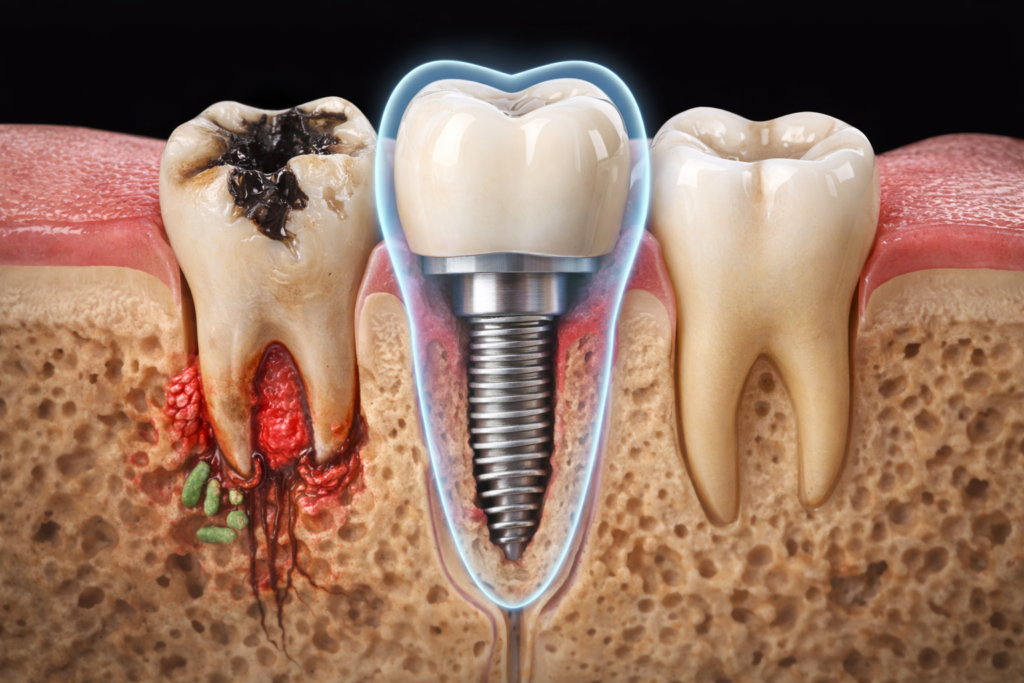
Why Delays Create Bigger Problems
An exposed prepared tooth isn’t built to withstand normal chewing forces.
Without protection, it can:
- Crack vertically
- Fracture below the gumline
- Become infected
- Shift position
- Cause bite misalignment
Delays may turn a simple recementing into a full extraction. And once a tooth is lost, restoration becomes more complex. Acting early protects what’s still salvageable.
The Bigger Picture: Restorations Protect Structure
Crowns and fillings aren’t cosmetic extras. They’re structural shields.
Every dental restoration serves a purpose:
- Reinforce weakened enamel
- Prevent bacterial invasion
- Restore chewing efficiency
- Maintain alignment
- Protect nerve vitality
- Preserve long-term oral health
When one fails, the protective system is interrupted. Restoring it quickly reestablishes stability.
What You Should Do Immediately
If your crown or filling comes off:
- Retrieve it if possible
- Rinse it gently (no scrubbing)
- Avoid chewing on that side
- Keep the area clean
- Use temporary cement only if necessary
- Call for professional evaluation promptly
Avoid superglue. Avoid ignoring it. Avoid waiting for pain to start. Pain often arrives after damage progresses.
Prevention Strategies for Long-Term Stability
While not all failures are preventable, you can reduce risk by:
- Wearing a night guard if you grind
- Avoiding ice chewing or hard candy
- Attending regular checkups
- Replacing aging restorations proactively
- Addressing minor sensitivity early
- Reporting looseness before detachment occurs
Restorations age. Monitoring them extends their lifespan.
Why Emergency Dental Care Exists for This
A fallen crown may not look dramatic. But functionally, it leaves your tooth exposed.
Emergency dental care exists to:
- Preserve natural structure
- Prevent infection
- Reduce pain quickly
- Restore chewing ability
- Maintain alignment
- Avoid escalation
Small structural problems can snowball fast.
Timely treatment keeps them manageable.
Strategic Benefits of Immediate Care
Seeing a provider quickly helps:
- Prevent secondary decay
- Protect nerve health
- Avoid fractures
- Maintain cosmetic appearance
- Restore confidence
- Shorten treatment time
- Reduce overall cost
What feels minor today can become major tomorrow. Intervening early changes that trajectory.
Conclusion
When a restoration fails, it’s more than an inconvenience. It’s a disruption in protection.
Acting quickly preserves what’s underneath and prevents small issues from becoming irreversible damage. Teeth are strong — but only when properly supported. And when that support fails, prompt professional care keeps your smile intact for the long run.